On January 8, 2026, China's National Intellectual Property Administration (CNIPA) released the Guidelines on Trademark Registration for Industrial Cluster Brands and Regional Brands (关于产业集群品牌和区域品牌申请注册商标的指引). The Guidelines explain acceptable use of place names for collective trademarks and certification trademarks. Generally, place names of administrative divisions at or above the county level cannot be used as trademarks.
A translation follows. The original text is available here (Chinese only).
To fully leverage the role of collective trademarks and certification marks, help create distinctive, competitive, and reputable industrial cluster brands and regional brands, and guide various regions to rationally promote the trademarking of industrial cluster brands and regional brands, this guideline is formulated in accordance with the relevant provisions of the Trademark Law, the Implementing Regulations of the Trademark Law, and the Regulations on the Registration and Management of Collective Trademarks and Certification Marks.
I. Setting the Purpose
Article 10, Paragraph 2 of the current Trademark Law makes collective trademarks and certification trademarks exceptions to the rule that place names of administrative divisions at or above the county level cannot be used as trademarks, thus providing a legal basis for the registration of ordinary collective trademarks and certification trademarks containing place names of administrative divisions at or above the county level.
In practice, when developing industrial cluster brands and regional brands, various regions typically use a combination of "place name + generic name of goods or services" or "place name + other distinctive textual elements" to convey information about the place of origin, indicate that a product (or service) originates from a specific location, and emphasize the advantages of that location. However, as a mark distinguishing the source of goods (or services), distinctiveness is a fundamental attribute that a mark must possess for trademark use. Since place names generally only indicate the origin of goods and cannot identify the producers, operators, or providers of services, they lack distinctiveness.
To guide applicants in making reasonable trademark registration applications for industrial cluster brands and regional brands, avoid the vicious cycle of rejection and repeated applications, and reduce applicant costs, this guide lists common trademark forms with distinctive features and situations where registration is denied due to lack of distinctive features or easy confusion among the public, for applicants' reference.
II. Scope of Application
Given that industrial cluster brands and regional brands are typical "quasi-public goods" used jointly by members within a region who possess certain qualifications and abide by certain rules, collective trademarks are more suitable as a legal protection path for industrial cluster brands and regional brands (excluding geographical indications) created in various regions.
Furthermore, when applying for registration of a collective trademark, not only are the names and addresses of the collective members and the rules for use and management required, but the rules must also clearly define the quality of the goods using the collective trademark and the responsibilities of collective members for violating the rules. Therefore, registering industry cluster brands and regional brands as collective trademarks facilitates the registrant's supervision and inspection of users of the collective trademark, thereby maximizing brand benefits. All registered trademarks listed in this guide are collective trademarks.
III. Common forms of trademarks with distinctive features
(i) The trademark application consists of distinctive words, graphics, or a combination of the above elements.
If a trademark application is filed using words, graphics, or a combination of the above elements that have distinctive features, the mark must be able to distinguish the source of goods or services and possess distinctive features.
1. The applied-for trademark consists of distinctive textual elements.
For example:
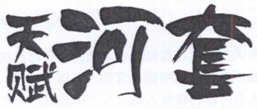
Trademark type: Collective mark
Applicant: Bayannur City Agricultural and Livestock Industrialization Leading Enterprise Association
Designated products: Items in categories 23, 29, and 31, such as yarn, yogurt, and oatmeal.
(Meaning: The unique resource endowment of the Hetao region)
2. The applied-for trademark consists of graphic elements with distinctive features.
For example:
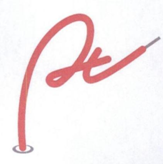
Trademark type: Collective mark
Applicant: Putian Shoe Industry Association
Designated goods: Class 25 sports shoes, casual shoes, leather shoes, etc.
(Meaning: shoelaces; graphic design of the initials of "Putian" in pinyin)
3. The applied-for trademark consists of the applicant's full name and distinctive graphic elements.
For example:

Trademark type: Collective mark
Applicant: Ruili Jewelry and Jade Industry Association
Designated goods: Class 14 jadeite, jade jewelry, and other similar products.
(ii) The applied-for trademark consists of a place name of an administrative division at or above the county level without other meaning, or other distinctive textual elements, and the applicant and the applied-for mark simultaneously meet the following conditions:
• The applicant is authorized by the people's government of the place name contained in the
trademark or its superior people's government;
• The applied-for trademark has acquired distinctiveness through long-term use;
• The applied-for trademark has a high degree of recognition in the relevant industry or is widely
known among the relevant consumer groups;
• The goods or services applied for must belong to industries that are explicitly supported by national policies.
For example:
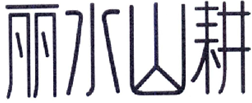
Trademark type: Collective mark
Applicant: Lishui Ecological Agriculture Association
Designated products: Meat products, preserved fruits, fresh fruits, and fresh vegetables, etc., in categories 29, 30, and 31.
(Meaning: The combination of place name, mountainous terrain, and intensive agricultural production methods)
(iii) The applied-for trademark consists of a place name of an administrative division at or above the county level without other meaning, a generic name of goods or services, a distinctive graphic element, and the applicant's full name. In addition to meeting the conditions listed in (ii) above, the applicant and the applied-for mark also meet the following conditions:
• The designated goods or services are identical to or closely related to the generic name of the goods or services contained in the trademark;
• The specific qualities of the designated goods or services are not determined by local natural and human factors, but their reputation is closely related to the place name contained in the trademark and will not be mistaken for a geographical indication.
For example:
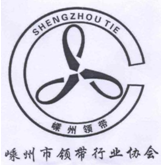
Trademark type: Collective mark
Applicant: Shengzhou Tie Industry Association
Designated goods: Class 25, including ties, bow ties, etc.
IV. Common Circumstances Under Which Registration Is Denied
(i) The applied-for trademark lacks distinctiveness
Distinctiveness is a fundamental attribute of trademarks and a prerequisite for obtaining trademark registration. If an applied-for trademark consists only of elements such as place names of administrative divisions at the county level or above without other meanings, or generic names of goods or services, and lacks distinctiveness as a whole, and has not yet acquired distinctiveness through long-term use, it is deemed to fall under the circumstances referred to in Article 11 of the Trademark Law and will be rejected.
1. The trademark application consists of elements such as the name of an administrative division at or above the county level without other meaning and the generic name of the goods or services.
For example:

Trademark type: Collective mark
Applicant: Liangshan Prefecture Barbecue Industry Association
Designated goods: Class 43 services such as restaurants and takeaway restaurants
2. The applied-for trademark consists of a place name of an administrative division at or above the county level without other meaning, a generic name of goods or services, and a distinctive graphic element.
For example:
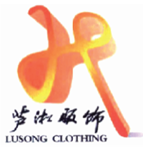
Trademark type: Collective mark
Applicant: Zhuzhou City Lusong District Garment Industry Association
Designated goods: Class 25 work clothes, shirts, coats, etc.
(This trademark consists of a separate text portion and a separate graphic portion. Although the graphic portion has certain distinctive features, the text portion is the main calling part of the trademark. The overall trademark still has a strong geographical meaning and lacks distinctive features.)
(ii) The application for a trademark is likely to cause public confusion.
If a trademark application falls under any of the following circumstances, it shall be deemed to fall under the circumstances referred to in Article 10, Paragraph 1, Item (7) of the Trademark Law and shall be rejected.
1. If the applied-for trademark contains a place name, but the applicant's domicile or place of business is not within the scope of that place name, it is likely to cause the public to be misled about the place of production of the goods or the source of the services.
For example:

Trademark type: Collective mark
Applicant: Maqin County Organic Livestock Association
Designated goods: Class 29 goods such as blood sausage, dried meat, and dairy products.
(The "Xingcheng" mentioned in the trademark refers to a county-level city under the jurisdiction of Huludao City in Liaoning Province; while the applicant is from Maqin County, Guoluo Tibetan Autonomous Prefecture, Qinghai Province.)
2. The words or graphics contained in the applied-for trademark are likely to mislead the public about the quality, main raw materials, function, use, or other characteristics of the goods or services.
For example:
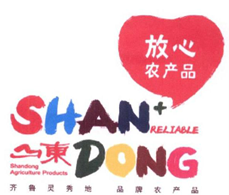
Trademark type: Collective mark
Applicant: Shandong Green Food Development Center
Designated goods: Fresh fruits, fresh vegetables, and other goods in Class 31.
(The trademark contains the words "safe agricultural products" and "RELIABLE," which, when used on the designated goods, could easily mislead the public about the quality of the products.)
3. The applied-for trademark contains a place name, a generic name of goods or services, and the reputation of the industrial cluster brand or regional brand indicated is closely related to the place name contained in the trademark, but the quality of the designated goods or services is determined by local natural and human factors, which is likely to mislead the public into believing it to be a geographical indication.
For example:
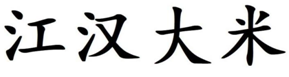
Trademark type: Collective mark
Applicant: Hubei Provincial Grain Industry Association
Designated goods: Rice products in Class 30
(The term "Jianghan" in this trademark can refer to Jianghan District of Wuhan City, Hubei Province, or the Jianghan Plain. This region has been known as a land of plenty since ancient times, and the specific quality of its high-quality rice is mainly influenced by local natural and human factors. Provided the relevant application materials are met, "Jianghan Rice" can be registered as a geographical indication. Ordinary collective trademarks differ from collective trademarks and certification marks registered as geographical indications in terms of function, usage, conditions of use for goods or services, and the rights and obligations of the registrant and user. To avoid public confusion, applicants should make a comprehensive judgment based on the actual circumstances when choosing the type of trademark registration protection.)
Source:
https://www.chinaiplawupdate.com/2026/01/cnipa-releases-guidelines-on-trademark-registration-for-industrial-cluster-brands-and-regional-brands/ (Chinese)

Stay IP to date